Sartre – Hell is other people
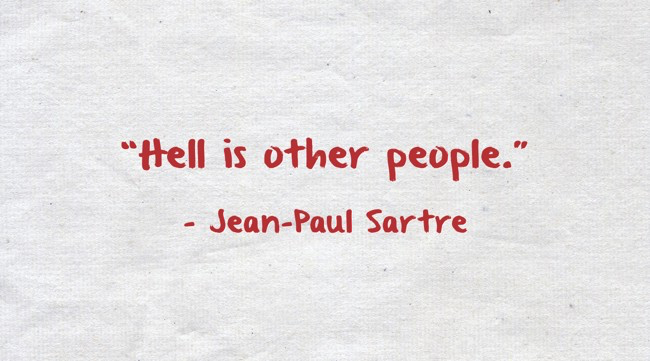
Last night I read the short play of Sartre – No exit. where he famously says “Hell is other people”. Interesting read. only 4 characters. the “butler”, one male protagonist and two female. the male is obsessed with being remembered and forgotten in the world and not to be remembered as a coward. he lived like one, died like one. one female has strong desire for the other female. the third female has a strong obsession with the male protagonist. the three locked in together in a room, 3 sofas. one each. each suffering their own version of hell. each are the torture mechanism of the others.
1. Garcin isn’t really afraid of being forgotten. He’s afraid of being a coward. He ran when he was supposed to stand his ground, and was shot while fleeing. In the room, he keeps watching his old newspaper colleagues on earth calling him a coward. Fading from their memory is a side effect. What tortures him is that he can’t go back and act differently, so the verdict on him is now permanent. He needs someone in the room to declare he isn’t a coward. And the person he needs it from is Inès, because she’s the one who truly understands cowardice and won’t lie to him.
2. Each one is the torture device for another. This is the genius of the setup. Their desires form a closed loop where every want is blocked by the third person:
No Exit Character Dynamics
| Character | Wants | From | Blocked by |
|---|---|---|---|
| Inès | Love/possession | Estelle | Estelle wants Garcin |
| Estelle | A man’s desire (to feel she exists) | Garcin | Garcin only cares about Inès’s judgment |
| Garcin | To be judged “not a coward” | Inès | Inès despises him and wants Estelle |
No one needs a torturer. The arrangement does the work. There are no mirrors, the lights never go off, and they can’t even blink, so there’s no escape from being seen.
What “hell is other people” actually means It’s usually read as “people are annoying.” Sartre later said that was a misreading. His point is that we can only know ourselves through other people’s eyes. If we hand our entire self-worth over to their judgment, they become our hell. This is especially true when we’ve stopped acting and can’t change the record, which is what death means in the play. The ending is dreary though: the door opens, and none of them leave. They choose the gaze over freedom.
**The uncomfortable part Sometimes we seek external validation. That’s Garcin’s exact condition. He isn’t in hell because Inès is cruel. He’s in hell because he decided her verdict is who he is. Sartre’s way out is the one Garcin never takes while alive: you define yourself by what you do next, not by what others conclude about what you’ve done.


Leave a Reply