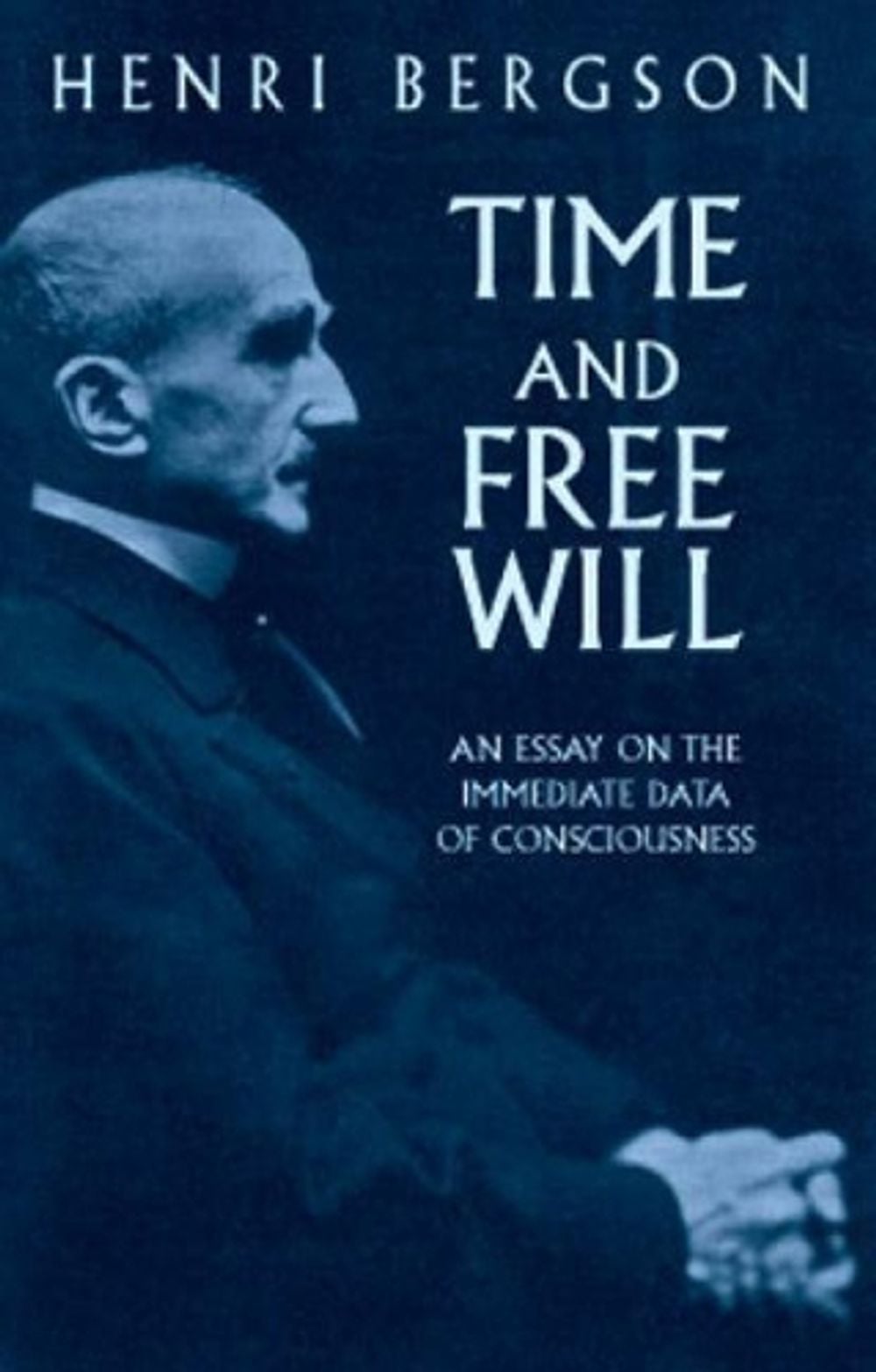
Chapter I: The intensity of psychic states
We say a feeling is “stronger” or “weaker”. Does that describe a measurable size, like a length or a weight? Bergson says no.
The main steps
- Measurable size, such as “bigger” or “smaller”, only makes clear sense in space. Intensity is a matter of quality.
- Neither outside causes nor movements in the brain explain intensity. We judge it directly, often without knowing its cause.
- In deep feelings such as desire, joy, sorrow, beauty and pity, “growing stronger” is really a change of kind, as the feeling colours more and more of our inner life.
- Effort, attention and violent emotions get their strength from tension spreading through the body.
- Sensations of sound, heat, pressure and light seem measurable only because we attach their outside causes to them.
- The science of psychophysics (Weber, Fechner, Delbœuf) assumes that sensations add up in equal steps. Bergson says this assumption cannot be proven and that it argues in a circle.
Remember this
Intensity is a quality of feeling, not an amount that can be measured.
Quantity\ Size, length, weight. Can be added, split and counted.
Quality\ Intensity of feeling. A change of kind, not of amount.
Chapter I’s main contrast: we borrow the language of quantity to describe something that is qualitative.
How we come to say a feeling is “stronger”
1. A feeling or sensation arises
↓
2. The body reacts and tenses
↓
3. We attach an outside cause, such as a loud sound
↓
4. We say it is “more” or “less”
The judgement of “more” comes from the last step, which borrows the idea of size from space.
Chapter II: The multiplicity of conscious states
The question
How do we count things, and is inner life countable in the same way? What is time, once we set aside the clock?
The main steps
- To count, we need units that are the same yet kept apart. Only position in space can do that.
- There are two kinds of “many”: physical objects, which are countable side by side, and conscious states, which blend into one another.
- Time pictured as an even line of moments is really space in disguise.
- Real duration is time as lived: a flow of changing qualities that melt together, like the notes of a tune. It cannot be measured and it never repeats.
- Zeno’s paradoxes arise from confusing movement with the space it covers.
- Language and social life freeze our changing inner life into fixed labels. This creates a surface self, while the deep self remains a blended whole.
- Many puzzles about cause, freedom and identity come from treating the living self as pieces laid out in space.
Remember this
Counting belongs to space. Lived time belongs to the inner self, and it is not made of separate parts.
Countable many (space)
Separate, side by side, each one counted. Like beads on a string.
Blended many (duration)
Melts together. Each moment carries the last, and no state repeats.
The core contrast of Chapter II. Bergson argues that inner life is the second kind of many.
Clock time against lived time
Clock time: the ticks are separate and can be counted. A clock counts the simultaneous positions of its hands.
Lived duration: one continuous flow, with no separate parts. It is felt, not counted.
Chapter III: Free will
The question
Are our choices free, or are they fixed by causes? If they are fixed, does the idea of freedom mean anything?
The main steps
- Physical determinism. The law of conservation of energy is sometimes used to claim that everything is fixed. But that law applies to systems that can return to an earlier state. Living, conscious beings change over time and never go back, so the law may not apply to them.
- Psychological determinism. This view treats the mind as separate ideas linked together. That mistakes the labels we give our inner states for the states themselves, which blend into one another.
- The free act. A free act comes from the whole self. When a deep feeling carries the whole personality, acting on it is the self acting on itself. That is what freedom means.
- Degrees of freedom. Most daily acts run on habit, and outside pressures can form a crust over the self. In a serious crisis, the deep self can break through and decide.
- “Could I have done otherwise?” Both sides of the debate get stuck on this question, which Bergson says misreads duration.
- Prediction. To predict a free choice perfectly, you would have to live the other person’s inner life. Astronomy works only because it ignores lived time.
- Causality. The word has two meanings. One is mathematical, and fits outer nature. The other is an agent’s effort toward a future aim, and fits freedom. Mixing them up produces determinism.
Remember this
Freedom is real but cannot be defined in abstract terms, because every definition turns living time into space.
The fork in the road (how the debate pictures it) Two roads wait side by side, and you choose one. This picture can only be drawn after the decision, so it shows the deed done, not the deed being made.
The living self (how Bergson describes it) Deciding is a self growing through hesitation until the act drops from it, like an over-ripe fruit.
Bergson’s central move in Chapter III: the decision is not a choice between ready-made roads.
Degrees of freedom, from least to most
Habit
Outside pressure
Social role
Deep self in a crisis
Most daily acts sit near the left. Free acts come from the deep self, on the right.
Physical law (conservation of energy): applies to repeatable systems, may not apply to living minds.
Psychological law (the mind as linked ideas): mistakes labels for living states.
The whole self acting: a free act is one that expresses the whole person.
Bergson’s argument, read from the outside in: each layer that claims to fix our choices rests on a confusion about time.
Conclusion
The question
Why do the arguments about freedom keep going round in circles?
The main steps
- We describe our inner life using ideas borrowed from the outside world, especially the idea of space. Bergson says this borrowing must be stripped away.
- Intensity is a quality. Duration is a flowing blend. Clock time mixes the two up.
- Science rightly leaves lived time out of its study of nature. Philosophy must likewise leave space out of its study of the mind.
- Kant saw that freedom did not fit a time made of separate parts. He moved freedom outside time altogether. Bergson’s answer is to see that time, as lived, is heterogeneous, and that a free act flows from a unique inner state.
Remember this
The problem of freedom comes from confusing three pairs: duration with extensity, succession with simultaneity, and quality with quantity.
Surface self. Words, habits and social roles. Most of daily life happens here.
Deep self. Unique, unrepeatable and living. This is where freedom lives.
Two selves, one person. Bergson says the free act comes from the deep self, not the surface one.
The three confusions Bergson unpicks
Duration (lived time)≠Extensity (space)
Succession (one after another)≠Simultaneity (side by side)
Quality (how a feeling is)≠Quantity (how much)
Once each pair is kept apart, Bergson says the old objections to free will lose their force.
Quick glossary
- Intensity: how strong a feeling is, judged directly.
- Duration: time as it is lived, a continuous flow of changing states.
- Extensity: the spread of things across space.
- Multiplicity: the state of being many. There are countable and blended kinds.
- Determinism: the view that every event is fixed by earlier causes.
- Homogeneous: the same all through, with no separate qualities.
Freedom is real, but it can’t be defined, because any definition would turn it back into something spatial.
He criticises Kant for treating time as uniform like space. That forced Kant to place the free self outside time altogether. Bergson’s answer is that freedom happens within real duration. Most of the time we live on the surface, as “conscious automata,” and only the deep self acts freely, which is why free acts are rare.


Leave a Reply